
Sweden
Get to know the individuals who drive our success
all you need to know
History about Sweden
During the middle Ages, Sweden came out of the Kalmar Union (1397). Starting in the 16th century, and throughout the 17th century, the country started to become more unified under the King Gustav Vasa. It expanded into areas around it (modern Finland, Norway, and Denmark) to start developing the Swedish Empire, which became one of the most well-known and well-respected Empires in Europe until the 18th and 19th centuries. In 1995, Sweden joined the European Union and continues to be a part of it to this day
all you need to know
About Sweden:

Sweden
Sweden is a beautiful northern European country, bordered by Norway in the west and Finland to the north-east. The largest city and the national capital is Stockholm. Sweden a varied climate with cold winters and mild summers. This makes the country a great mixture of cultures and people, perfect for international students looking to study and gain a wider perspective of the world.
Economy
At present, the economic growth rate of Sweden is pegged at about a rather steady 1.2 percent (2019). The country continues to have a rather high per capita income and constitutes of highly skilled workforce. Employment rates, or rather unemployment rates continue to be a concern for the country.

Geography:
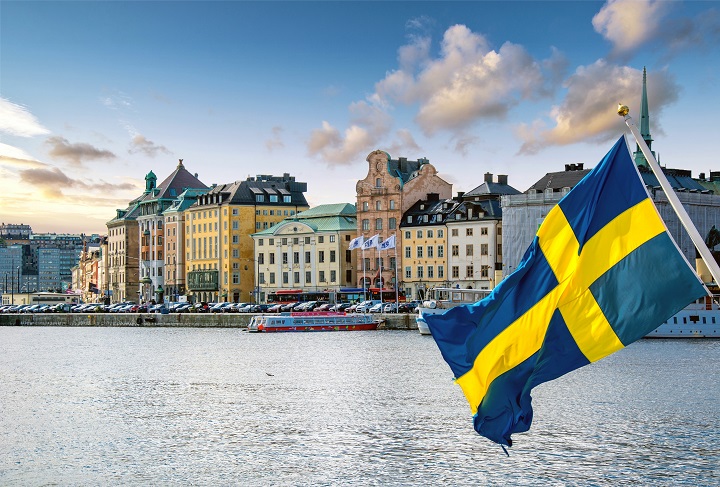
The country of Sweden in Northern Europe on the Scandinavian Peninsula. Sweden is bordered by Norway to the west. The border between Sweden and Norway is in the Kolen Mountains. Finland is northeast of Sweden, and the Baltic Sea and Gulf of Bothnia are to the east and south. Sweden has thousands of lakes, streams, mountains and rolling hills. In northern Sweden there are a lot of snow-covered mountains and forests.
Climate
Sweden’s weather has many faces. The country enjoys a mostly temperate climate despite its northern latitude, mainly because of the Gulf Stream. Annual rainfall averages 24 inches and the maximum rainfall occurs in late summer. Sweden boasts considerable snowfall, and in Sweden’s north snow remains on the ground for six months each year.


Culture:
Sweden boasts an interesting Nordic culture, one that was once dominated by Viking traders.Sport has become an important part of Swedish culture in recent years, with the local government pushing for more competiveness among the population. Swedish locals love football, European handball, ice-skating and ice hockey. Tennis has also become a major pastime over the last few decades.
Innovation:
Some of the world’s most successful innovators are from Sweden. Women and men who change people’s lives, by overcoming challenges and breaking new ground. A number of international indexes have been developed in a bid to measure the ability of countries to create environments that encourage innovation. According to them, Sweden is one of the most creative places on the map. Also, when the innovation and technology magazine Red Herring listed the most innovative and promising companies in the world in 2012, eight out of 100 were Swedish. No small feat for a small nation.

Why study in Sweden?
all you need to know
SWEDEN: A GREAT CHOICE FOR STUDYING ABROAD

Look beyond the more popular study abroad destinations (UK, US, Australia, Canada) — look north, actually — and you’ll find plenty to excite international students in Sweden. Few countries offer a mix of an infectious innovative culture and high-quality education as well as Sweden does. Studying here will not only give you that coveted global perspective, but you will also gain practical skills while learning which makes you more employable when you graduate.
1. HIGH QUALITY EDUCATION:
Academics are top-notch at Sweden, offering world-class degrees in several fields. There are 14 public universities and a number of independent institutions in Sweden. Top-ranked universitites for you if your’re interested to study in Sweden include karolinska institute, Lund University, Uppsala University, Stockholm School of Economics and Stockholm University. Students are taught how to develop crealitvity and innovative thinking to find solutions to problems, which gives them the ability to think outside the box and makes them job-ready upon graduation.


2. AFFORDABLE TUITION COST:
International students for the EEA, the European Union, and the Nordic countries don’t have to pay for tuition at Swedish universities. For those outside these countries, tuition fees range from USD $8,000 to USD$15,000 per academic year, which is lower than the average tuition fees in the UK and US. For those outside these countries, tuition fees range from USD $8,000 to USD$15,000 per academic year, which is lower than the average tuition fees in the UK and US.
3. Free Tuition for Students from EU Countries:
If you are an international student from a European Union country, you have another good reason to study in Sweden: tuition is free. Although the cost of living can be high in Sweden, it more than evens out when you factor in free tuition. With the rising costs of tuition in other countries, more and more students are applying to schools in Sweden. Last year, Lund saw 78 per cent increase in degree applications from the UK.


4. You can discover your strengths and reach your fullest potential:
Swedish universities will encourage their students to work on your strengths and talents, instead of thwarting creativity. The knowledge system is student-centric and your work with your teachers is usually informal, as opposed to the more formal “student/master” feel that you may get in other situations. Because of this, they value initiative and independent thinking.
5. You will be surrounded by innovation and creativity:
Innovative research is done by both Swedish companies and universitites. The Swedes embrace creativity and institution, and are proud of what their minds have been able to create. The results of this research and creativity have generated several successful inventions that are known throughout the world

More Facilities
BONUS! ECONOMIC OPPORTUNITIES:
Students should be very active and alert as jobs in Sweden are very competitive. The average salary in Sweden for basic jobs in supermarkets, stores, restaurants, and many home service jobs range from 20,000 SEK and 30,000 SEK. The minimum per hour rate in Sweden is 125 SEK/hour.
Sweden grants international students the right to work while they study. … If you’re from an EU/EEA country you may stay in Sweden after your studies to search for work. If you’re coming from outside of the EU/EAA you can apply with the migration board to stay in Sweden for 12 months after graduation to search for work.
all you need to know
Working Rights:

Work while you study:
As an international student in Sweden, there are no restrictions on the number of hours you can work. Many international students find part-time jobs to boost their income, but it’s also a great way to meet new people, learn about the local culture, and practise your Swedish. However, you should always be mindful of any extracurricular commitments. Including lectures, seminars, independent reading, and course work, you will need to dedicate around 40 hours a week to your studies. Working too many hours at a part – time job could impact your grades, and poor grades may prevent you from extending your residency visa.
Work after you complete your studies:
After graduation, Sweden is a great place to begin a career. Graduates can extend their residency by 12 months, giving them plenty of time to find a job or even start a new business. Graduate career fairs are a big deal in Sweden. The fair in Gothenburg and the fair in Stockholm are held in February and January every year. Graduates and final year students can meet representatives from some of Sweden’s biggest companies, including IKEA, Volvo, and Skanda. So don’t forget to take lots of CVs. And while it is likely everyone will speak excellent English, employers are always really impressed with international students who have a solid grasp of Swedish or show willingness to learn the language.


Learn skills for a global career:
Many degree programs in Sweden include internships, which are a great way to get real-world experience while also enabling you to build your professional network. Sweden is home to some of the largest number of MNCs in the world. Several leading companies such as IKEA, TetraPak, Volvo, Ericsson, AstraZeneca and H&M are from Sweden. An internship or full-time position at any of these companies is sought after by most students. Swedish universities focus on helping you learn skills that you will need to succeed in a global career.
Great quality of life:
Sweden is clean and safe, and the standard of living is high. Sweden’s public transport – extensive network of buses, trains, subways, trams, boats, planes and more – can take you anywhere you want to go, car-free. The Swedish welfare system brings many benefits to employees. These include free healthcare, sick leave, child care, education and 18 months of paid parental leave for each child. There are also state subsidies in a range of areas to ensure that the quality of life is exceptional.

APPLICATION PROCEDURE
Required Documents:
- Your passport, valid for the duration of your studies plus one month.
- Two Photograph (With White Background)
- A letter of acceptance from a Canadian educational institution confirming name and length of the program, tuition fees, living expenses, semester for which the admission is valid and last date for registration.
- All educational documents, including marks sheets (SSC, HSC, Bachelors, Masters or other post- secondary, college, vocational or university diploma, certificate or degree).
- Proof of funds sufficient to cover your tuition and living expenses for your first year of study in Canada.
- You must provide a one year statement of transactions from personal bank account(s) (an original certified bank issued statement or a certified copy of passbooks), as well as fixed deposit certificates, savings certificates, PSP certificates or any other proof of savings.
- You must also demonstrate that sufficient funds will be available to support yourself during the whole duration of your program.
- Confirmation of any scholarship, grant, teaching or research assistantship including name of the providing institution or organization, amount per semester or year and duration.
- If some or the totality of your funds are provided by a sponsor (either parents or third party) you must also include:
- Notarized declaration of sponsorship. If you have more than one sponsor, a separate declaration must be provided for each sponsor. However, sponsors who are husband and wife can appear on the same declaration.
- Details of assets and income for each sponsor with supporting documents such as property documentation, land deeds, rent agreement, business license, business tax information, employment letter with salary information.
- You must also provide the income tax forms (tax assessments and tax paid receipts showing total income and amount of income tax paid) for the past two years.
- If someone other than yourself or your parents is providing funds you must include:
- Letter of explanation as to the reason why this person is assisting
- Number of persons living in this persons household
- Proof of this persons relationship to you; birth, marriage or school certificates, passport.
- Affidavits or self-declarations are not acceptable proof of relationship.
- Proof of employment for yourself, if applicable, and your parents (employer’s full name, address, phone number, name of supervisor with his phone number, length of service and salary details).
- Your police clearance certificate and your birth certificate
- Proof of Tuition fee payment
- Visa Application forms
- 2 complete photo copy sets of all the above attested and notarized.
Let’s Discuss Your Future at Off 2 Abroad
Join us to explore your study abroad options and see how our expert team can support your educational journey. We’re excited to help you achieve your global academic goals!